International Pride
Stories of LGBTQ+ Pride from Across the World

American pride as we know it today was founded by Brenda Howard in 1970, one year after the infamous Stonewall riot. Stonewall was an LGBTQ uprising that’s often regarded as the first unofficial pride, and had taken place on June 28th 1969. Nine police officers violently attacked the Inn and Bar, as in 1969, gay marriage was not yet legal and homosexuality was heavily frowned upon with a law reading police should apprehend anyone “not wearing three or more gender appropriate articles of clothing”. Stonewall inspired Brenda, who was an activist in the anti-war movements of the time, to organize the first ever New York parade, to be attended by thousands and stretch over five city blocks. Brenda was a hard working, empathetic, polyamorous feminist who, although died in 2005, created a legacy that affects millions today.
The iconic pride flag we see now was created by SanFrancisco artist, Gilbert Baker, aiming to link art and social justice. Keeping true to his goal, the flag made its debut in 1978 at the San Francisco Freedom Day Parade, its original design had eight colors, each with their own meaning. Pink was for sex, red for life, orange for healing, yellow for the sun, green for nature, turquoise for art and magic, blue for serenity and purple for the spirit. The pink and turquoise were removed in the following year due to the cost of mass-manufacturing and display considerations, leading us to our better known six color design.
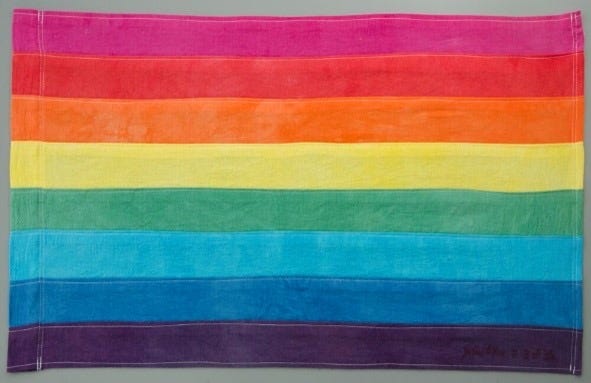
(Gilbert Bakers Pride Flag)
Gay Marriage in the U.S was legalized by the Supreme Court on June 26th, 2015 (ruling 4-5). Although it seems relative and “every-day” now, the free-spirited, fun loving and celebratory pride we enjoy is not far separated from the anger and fear of Stonewall. Like those in America, many countries have experienced hardship to earn their right to love. Taiwan held their first ever pride-parade in Taipei in 2003 where despite weather conditions and attendance varying people gathered for years to see their human rights come to fruition. On May 17th, 2019 the same-sex marriage bill passed on its third and final ruling. Even before same-sex marriage became legal, Taiwan was known to be one of the safest and most vibrant queer communities in all of Asia. Despite barriers of family expectations and societal behaviors, Taipei has been called “an Oasis” and a “safe haven” with a thriving gay community. Over forty thousand people rallied outside the Yuan building to celebrate this bill together.
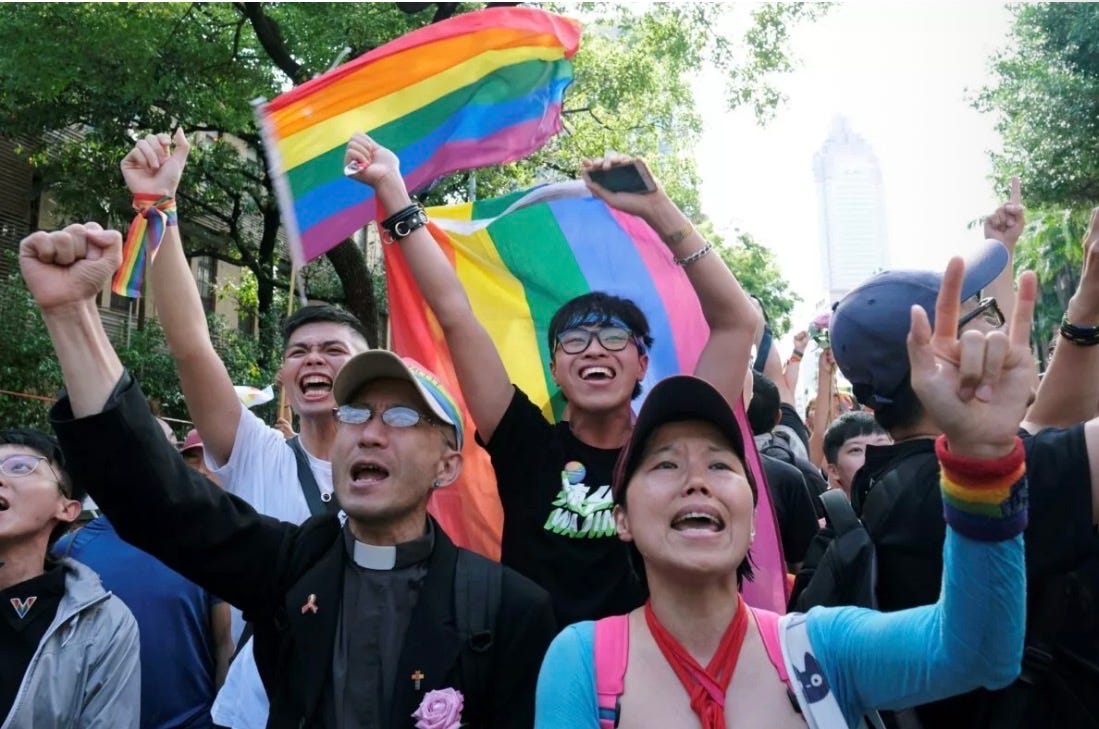
(May 17th Pride Celebration in Taiwan. CC East Asia Forum and Pan Wang from the University of New South Wales)
The largest annual Pride festival in East Asia is the Pink Dot Festival in Singapore. The Pink Dot is a non-profit organization started by passionate residents who say they deserve the freedom of love. The color pink was chosen to represent the colors of their national flag (red and white), standing for an inclusive society within their red dot. Like the U.S, Singapore and Taiwan, Vietnam also has a well established and on-going Pride celebration. Beginning in 2012, the ever growing event was held in Hanoi, and now holds film screenings, research presentations and a bicycle rally. Now taking place in seventeen cities across Vietnam, the biker rally attracts 700 annual attendees and is widely reported in the media.
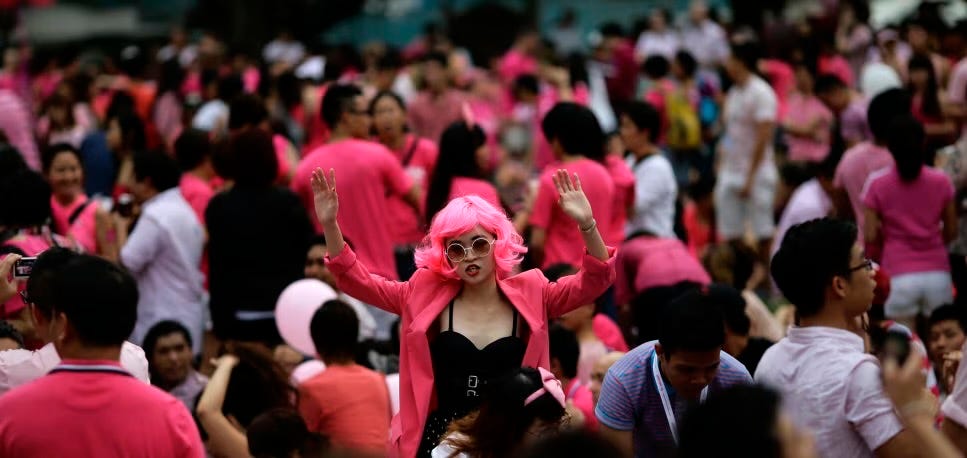
(Singapore’s Pink Dot Rally, Heather Chen//Tom Chong)
Joyful celebration across the world in the name of love, may seem frivolous or unnecessary from our vantage point, when the laws and public opinion have changed, but it’s important to remember we’re not the only ones here. Not only did the freedom we revel in today come from the pain of generations before us, but not everyone has gotten to reap the benefits. Pride in America is not just to celebrate our own, but to stand in solidarity and show that change is possible for the world around us.
India had their first ever pride parade in 2008, across the four cities of Delhi, Bangalore, Pondicherry and Kolkata with about 2,200 participants overall. Delhi had ruled in July of 2009 that intercourse between two consenting adults could not be a criminal act, but reversed their decision five years later due to pressure from conservative and religious groups. Same-sex marriage was never technically illegal, but specifically gay sex was criminalized. Christian organizations like the Apostolic Alliance, Utkal Christian Association, and Trust God ministries filed petitions to the Supreme Court showing support for ban on homosexuality, arguing it’s immorality. Hindu organizations also supported this, in the name of Indian tradition, and Islamic organizations lobbied courts, expressing omosexuality as an “unnatural contrary to religious and societal law”. The Supreme Court would reinstate section 377 in 2014, the 19th century law that barred “carnal intercourse against the order of nature”. The police used this law to threaten and blackmail members of the LGBT Community, and found violations were punishable by both fines and imprisonment. A non-government agency, The Max foundation would present the argument to courts that protection from AIDS and HIV would become increasingly difficult with people not being able to honestly share their sexuality and lifestyle for fear of prosecution. The Max foundation is a global non-profit that dedicates itself to health equity, providing medications, technology and supportive services to those in need, including low-income countries.
In 2018, the courts would accept a petition from Aditi Anand and her partner, Susan Dias, who had lived together for twelve years and raised a child in Mumbai. Anand and Dias were one of four LGBTQ couples actively petitioning the court to decriminalize same-sex partnerships. Petitions were accepted in January, and the courts gave them to the Indian government by February to be heard in March of the same year. India would reinstate same-sex marriage a few months later on September sixth, 2018. Anand says “I remember changing my Facebook display picture to one of Susan’s and mine that Day” portraying the breath of fresh air safety can provide. Although Aditi and Susan do what every heterosexual couple does, managing finances and raising children, they do not have legal security as a couple and feel unequal. “I feel the need to ask for rights,” says Dias. Not feeling security in a same-sex marriage speaks to the lack of permanency, and the feeling of having to question your protection, something that heterosexual couples often take for granted.
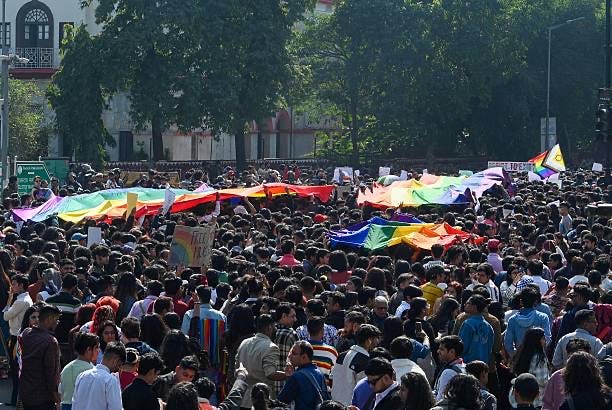
(Delhi Queer Pride Parade, February 8th, 2026)
Bulgaria has a generally conservative population, where discrimination against LGBTQ population remains scary and laws allow for little protection. Discrimination has been banned since 2004, and same-sex marriage is legal, but not well-received. In 2021, the Court Justice of the European Union heard the case of “Baby Sara”. Baby Sara was born to a lesbian couple, living in Spain, which had denied citizenship due to neither parent being a Spanish national. One mother was from a British territory and could not automatically pass on her citizenship under UK laws, and the other being from Bulgaria was refused citizenship for her baby as Bulgaria does not recognize same-sex marriage. The EU court determined that, because the child was a European citizen regardless of state, they were granted European citizenship, guaranteeing baby Sara’s freedom of movement and documentation, since being stateless typically means being unable to leave your place of birth. “Gender change” has been outlawed in Bulgaria since 2015, and propaganda or promoting “non-traditional sexual orientation” has been banned in schools since 2024. Hate crimes are not uncommon in Bulgaria and are frequently ignored by its authorities. In 2008, a twenty five year old student “perceived to be gay” was murdered in a public park in Sofia, Bulgaria, with two witnesses testifying they saw members of a group intending to “cleanse the park of gays”. In January of 2014, the government committed itself to outlawing hate crimes, but following parliamentary elections the following October, the newly established government has been silent on the issue, even ignoring the public assault of two minors on September 27th 2020, done in support of “cleansing action”.
Much like Bulgaria, The Russian government is also non-supportive of LGBTQ citizens. Moscow city authority placed a hundred-year ban on Pride parades, and same-sex marriages and civil unions are illegal throughout Russia. On May sixteenth, 2009 police would violently break up a Pride protest outside of a University in South-Western Moscow, where protesters waved flags and chanted “homophobia is a disgrace of this country” and “We demand equal rights”. Police charged the group in order to force them into waiting, nearly busses, even ripping off the shirt and bra of a young woman, Kenia Prilepskaya, in front of media reporters. Government officials feared drawing attention to their anti-gay policies ahead of the “Eurovision Song Contest” when entrants threatened to boycott the event if activists were not allowed to march. Moscow’s mayor, Yuri Luzhkov prohibited all gay rights-meetings, calling it “satanic” and Christian-Orthodox group as well as Neo-Nazi’s publicly denounced homosexuality and said they were planning a retaliation on Pride protesters ahead of the Eurovision concert. The Christian Orthodox groups say “We won’t allow for this satanic gathering, we don’t want Moscow to become sodom”. The term “sodom” here would mean religious and political culture falling to moral and spiritual ruin, homosexuality being a threat to traditional Russian values.
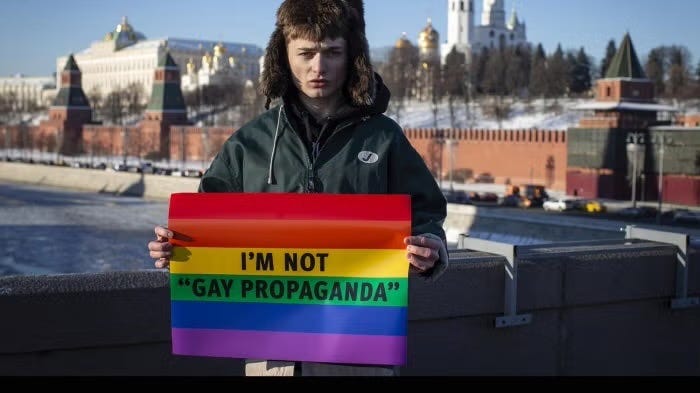
(Russian blogger, Zhenya Svetski, Moscow, December 18th, 2018)
Uganda has held many pride parades, the first in 2012, when organizing pride events was considered an “act of defiance” to protest strict sodomy laws, and again in 2014 in hopes of appealing “The Gay Bill”. This bill included life imprisonment for “aggravated homosexuality”, which would be to participate in same-sex relationships, or promote homosexual behaviors. The march in 2014 is well recounted by Richard Luismbo, a research manager at Kampala-based NGO Sexual Minorities in Uganda, who was heading the committee leading up to the parade. When speaking on this bill and reflecting on the people he knew, he would say “There are many people who are still languishing in refugee camps in Kenya. The lucky ones have gotten to western countries, but there are people who remain in Uganda and the thing that keeps them going is family. It’s not just biological family, it’s also the allies that stood by our brothers and sisters.” The parade was encouraged by organizers, for allies, trans individuals, gays and lesbians alike, but was a nerve-racking event and had to be kept quiet for security purposes. “We are encouraging our LGBTI people to come out with their families, to show that gay people also have children or supporters within their family”. Lusimbo spoke excitedly about the events that had been planned, this Pride would host fashion shows, documentary screenings and education on health services. He hoped these cultural performances would show that they were “not aliens, and have always been here”. In 2023, Ugandan president Yoweri Museveni signed the “anti-homosexuality act”, making “aggravated homosexuality” punishable by death, which remains today. Celebration in the name of LGBTQ rights is something we’re lucky to partake in, but safety is never a guarantee. While we celebrate our Pride this month, we also support our Russian, Ugandan, and Baltic friends who are still on their never-ending and horrifying path to love and acceptance.
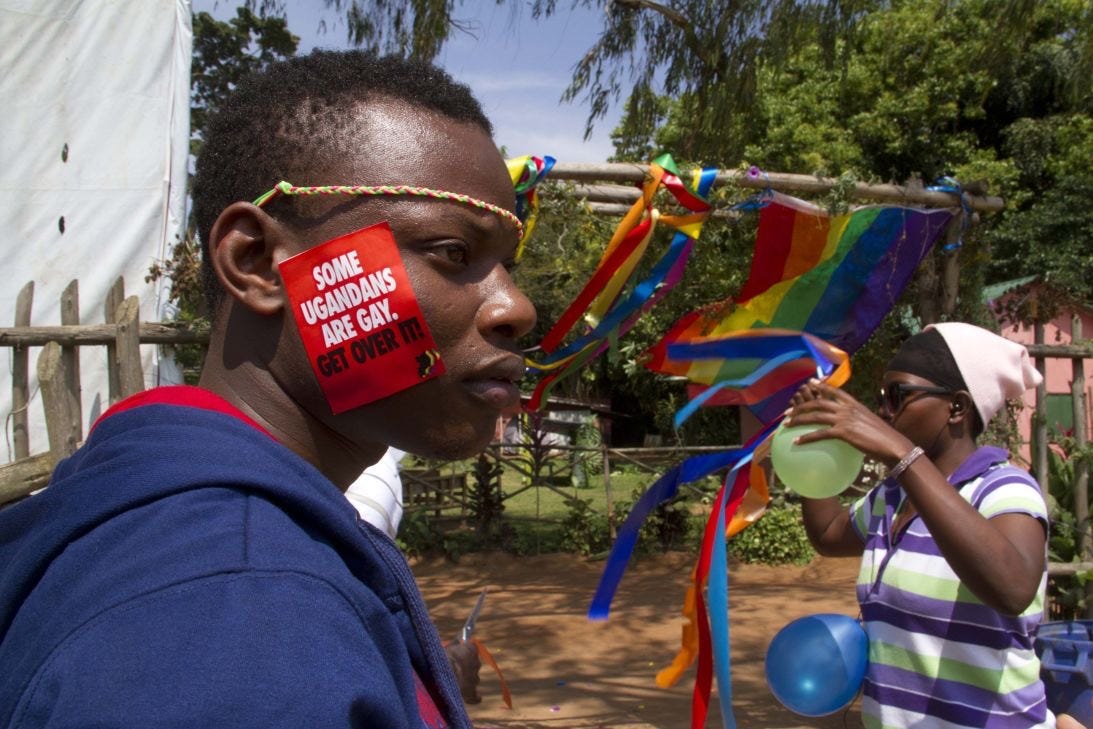
Gay Pride, Entebbe, August 9th, 2014 CC Issac Kasamani)
“You’re not safe in Moscow”, Gay Eurovision fans told ahead of march
https://www.theguardian.com/music/2009/may/13/gay-march-eurovision
Moscow Riot Police Violently Break Up Gay Pride Ralley, may 16th 2009
https://www.theguardian.com/world/2009/may/16/moscow-police-gay-rights
LGBTQ rights in Bulgaria
Indian LGBTQ couples fight for legal recognition of same-sex marriage, Raksha Kumar, March 11th 2023
Uganda’s Controversial “Anti-Homosexuality Act” Includes Possibility of Death Sentece, Nina Motazedi June 1st, 2023.
Pride Parade Wiki
The Reversal on Gay Rights in India
https://pmc.ncbi.nlm.nih.gov/articles/PMC3927237
Celebrating Gay Pride in Uganda: We Want To Show We’re Not Aliens https://www.cnn.com/2015/08/05/africa/gay-pride-uganda-richard-lusimbo
In Honor of Pride, A little History, NASCSP
Brenda Howard Wiki
https://en.wikipedia.org/wiki/Brenda_Howard
NYC LGBTQ Historic Sites Project
https://www.nyclgbtsites.org/site/starting-point-of-nycs-first-pride-march/
This is a wonderful, informative, and important piece Fi.
I love how you have gathered together facts and stories from disparate parts of the world and brought them together under the banner of LGBTQ history, pride, activism, solidarity, and progress.
Great stuff:)